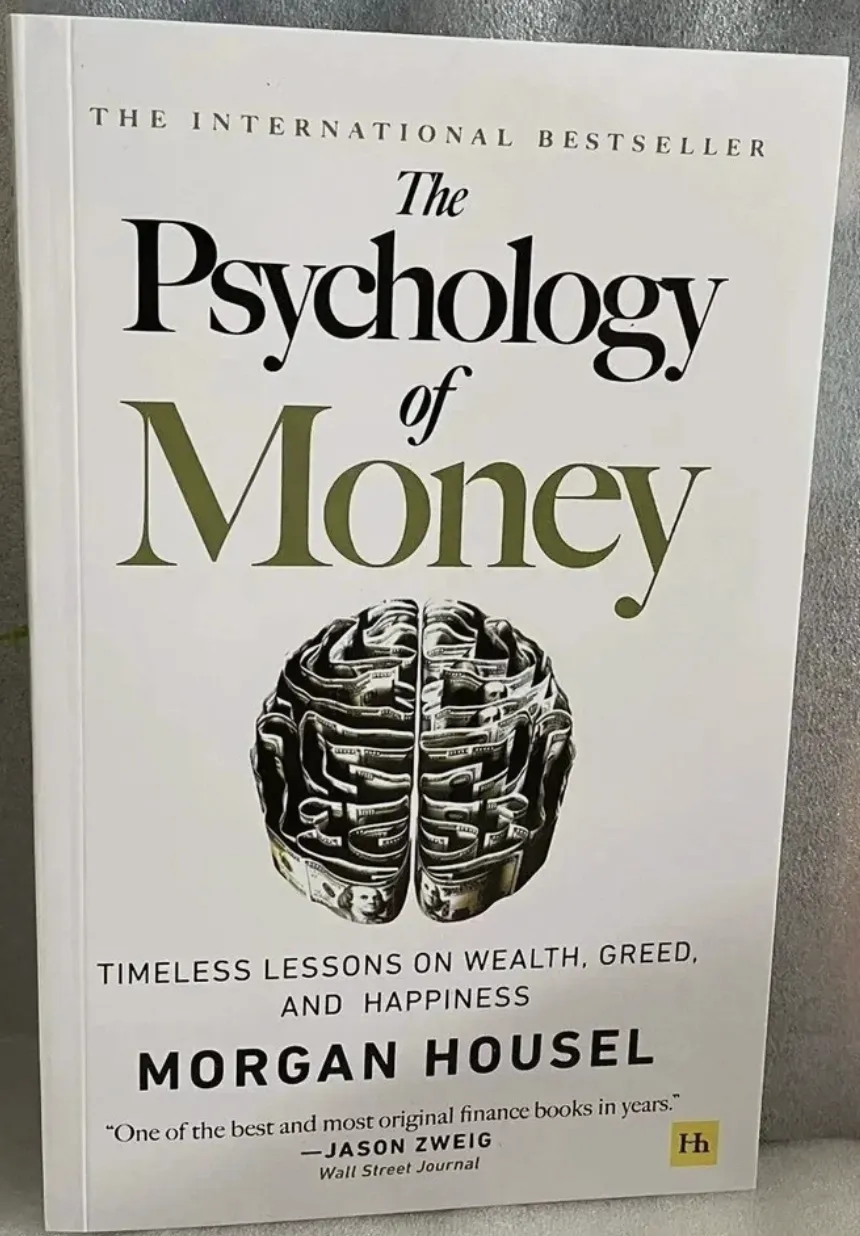
What The Psychology of Money Taught Me
About a month ago, I shared 12 books that changed my life.
Books that completely transformed how I think and make decisions.
And last week, book #13 made the list.
I finally read The Psychology of Money by Morgan Housel…
…and man — it didn’t just teach me about money.
It changed the way I behave with money.
I need to share the massive mindset shifts it brought me...
Getting Wealthy vs. Staying Wealthy
Here's the big one:
getting wealthy and staying wealthy require COMPLETELY different skill sets.
Getting wealthy?
That's offense.
It requires taking risks, being optimistic, starting businesses, making investments, buying real estate... getting after it.
Staying wealthy?
That's all defense.
It's about humility, frugality, and building a margin of safety so you never go backward and lose everything you've built.
I've always been entrepreneurial and comfortable with risk – much more than the average person.
My mindset has always been:
"How can I get the biggest returns possible?"
But Housel made me realize something profound...
Once you've achieved some level of financial peace..
Why would you risk going backward?
Offense builds money.
Defense keeps it.
And keeping it matters more than we admit.
The more wealth you build, the less you should risk.
Sounds obvious, right?
I didn’t live like it.
I used to think:
“Why pay down a 5% mortgage when I could earn 10% somewhere else?”
Math says chase the 10%.
The Psychology of Money says there’s something math can’t measure:
Peace.
Paying off debt might “only” return 5%, but..
It guarantees peace of mind.
Momentum.
A full night's sleep knowing nothing can wipe you out.
And peace of mind compounds just like money.
We don’t talk about that enough.
Luck and Risk: The Hidden Forces
Another eye-opener:
Luck and risk matter WAY more than we think.
We look at massively successful people and don't realize how much luck factored into their success.
Bill Gates talks about this all the time – how fortunate he was to attend the only high school with a computer that he could access.
Without that specific circumstance, Microsoft would have never existed.
This realization taught me two things:
Be humble about your wins.
Don't judge yourself or others harshly for failures.
Sometimes you can make a perfectly rational decision that still fails because of bad luck.
And sometimes a terrible decision works out because of good luck.
Freedom: The Ultimate Wealth
The highest form of wealth isn't a number in your bank account.
It's the ability to:
Do what you want, when you want, with who you want, for as long as you want.
That's REAL freedom.
And every dollar you save, every debt you eliminate, buys you more of that freedom.
More savings = more options
Less debt = more flexibility
This is why my thinking has shifted from "maximum returns" to "steadily building unshakeable freedom."
The Generational Money Mindset
Housel brilliantly explains why different generations think about money differently – how world wars, interest rates, and cultural shifts have shaped our financial psychology decade by decade.
It made me question why I think the way I do about money.
For example: debt wasn't always normalized.
It didn't used to be normal to go hundreds of thousands of dollars into debt for education.
It wasn't always expected to have credit card debt, car loans, and a mortgage on a house bigger than you need.
These things have become normalized only recently.
Knowing Your "Enough"
One of the most powerful concepts:
Knowing your "enough" point.
So many people ruin great financial situations because they always want MORE.
But knowing when you have "enough" is how you avoid terrible decisions driven by greed.
The Invisibility of True Wealth
"Wealth is what you don't see."
Being rich means big houses and fancy cars.
Being wealthy means having assets you didn't spend.
Many "rich-looking" people are actually broke, while truly wealthy people often live modest lives with massive savings.
Wealth isn't visible.
It's in the background, providing security and freedom.
The Simple Formula That Works
After all the complex financial strategies and get-rich-quick schemes out there..
Housel's conclusion is refreshingly simple:
Long-term thinking wins.
Wealth comes from consistency, patience, and not quitting.
And most importantly – avoiding catastrophic mistakes.
Getting rich slowly beats getting rich quickly every time.
The key is to never go backward.
Here’s the one takeaway I want you to walk away with today:
Build wealth with offense.
Protect it with defense.
Because money is useless if you lose the freedom it was meant to buy.
Have you read it?
Reply and tell me your biggest takeaway.
If you haven't read it yet, did any of these ideas resonate with you?
I'd love to know.
Go secure more freedom,
-Zack
